

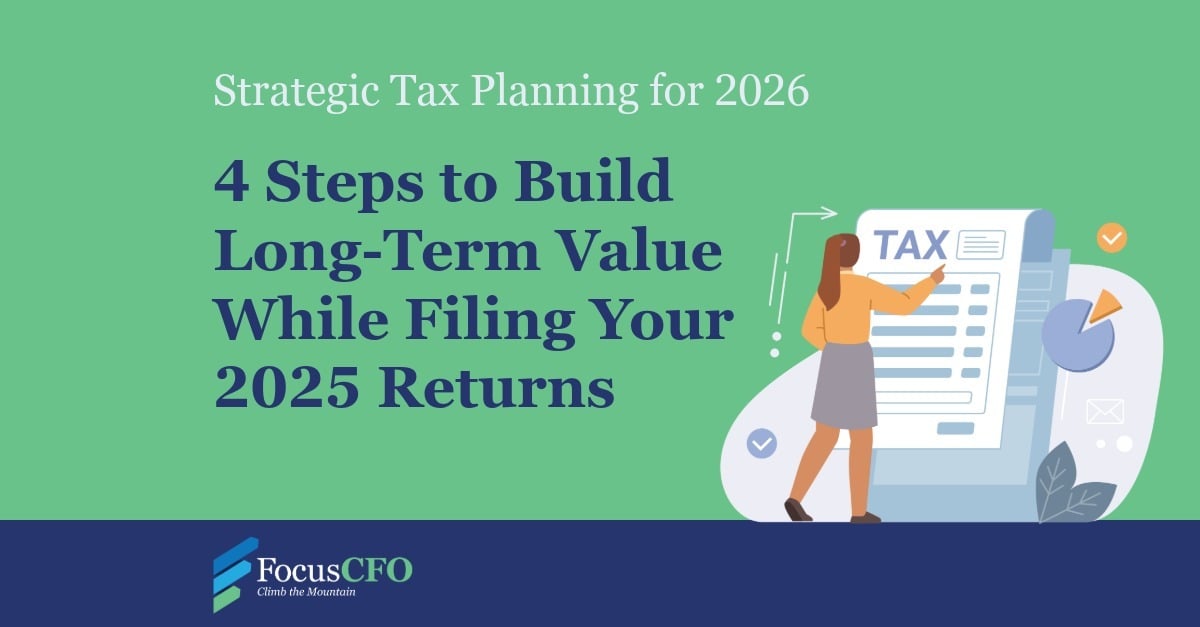
Taxes are the top concern for business owners as we enter the 2026 filing season. According to the January 13, 2026, NFIB Small Business Optimism Index, 20% of small business owners report that taxes are their single most important problem—the highest reading since May 2021.
However, as Steve Richards, an Atlanta-based Fractional CFO with FocusCFO, points out, "There’s not much that can be done about 2025 taxes in 2026." This filing season is the perfect time to shift your perspective and work towards implementing a strategic tax approach that fosters long-term growth and builds business value.
1. Shift Your Mindset: Lifestyle vs. Value Growth
Many businesses begin as "lifestyle" businesses, designed to provide current cash for the owners to live their desired lifestyle right now. However, Steve Richards notes that forward-looking "value-growth" businesses require a different focus.
- The Lifestyle Approach: Running personal expenses through the company to lower reported profit and minimize tax bills.
- The Value-Growth Approach: Sacrificing short-term "perks" to reinvest profits into the business. This improves cash flow, attracts better financing, and significantly increases your overall business valuation for a future exit.
- Learn more about shifting from lifestyle to strategic growth here.
2. Stack Your Financial Deck with a CFO
While a lifestyle business might only need a bookkeeper or CPA, a value-growth business needs a senior-level financial leader who can apply a long-term vision.
- Research & Planning: Your CFO will work in partnership with the rest of your finance team to research new deductions, credits, and relevant tax code provisions—such as the restored 100% bonus depreciation—that can benefit the business now and in the future.
- Holistic Perspective: A CFO ensures tax decisions are part of a 3-to-5-year financial roadmap, balancing short-term efficiency with long-term wealth creation.

3. Use the CFO as Your Tax Strategy Evangelist
As a business owner, you must communicate the shift from "lifestyle" to "value growth" to your entire leadership team.
- The Benefit: Educate your team on how strategic tax decisions contribute to growth. Improved cash flow means more funds for technology, expansion, and talent retention.
- Planning Ahead: For example, if you plan to change your tax status (like moving from an S-Corp to a C-Corp) in anticipation of an exit, the IRS may require a five-year look back. A CFO ensures you start that process now.
4. Implement a Year-Round Strategy
Tax filings come around once a year, but they require a thoughtful, year-round approach. Steve Richards recommends four key steps to incorporate tax strategy into your broader cash flow management:
- Develop a clear financial strategy with defined goals.
- Engage with tax professionals early in the planning process.
- Invest in technology and systems for accurate financial reporting.
- Educate your leadership team on the importance of strategic tax planning.
"Tax strategy is about holding on to more of the money your business has already earned," Richards says. You don’t have to generate more revenue to have improved cash flow—you just have to be strategic.
Partnering for Long-Term Success
Navigating the shift from a lifestyle focus to a growth-oriented strategy requires more than just hindsight—it requires a dedicated partner. A Fractional CFO from FocusCFO acts as that strategic leader, bridging the gap between today's tax obligations and tomorrow’s financial success. By integrating tax planning into your long-term roadmap, we help you unlock capital for expansion and build a more valuable, exit-ready company. Ready to move from tax fretting to strategic planning? Contact us today to schedule a complimentary consultation and discover how a Fractional CFO can transform your business’s financial future.